How AI Voice Agents Can Transform Sales & Customer Service

A few years ago, if someone had told me that AI would be answering business calls, I would have pictured a cold, robotic voice and those never-ending menus.
You know the drill.
“Press 1 for billing. Press 2 for support.”
And somehow, whatever you choose was always wrong.
Fast forward to now, and it’s a different story. These days, you can call a business and say,
“I want to check my order.”
And the voice on the other end actually gets it. It looks up your details, gives you an update, books an appointment or reschedules it for you, and you are done, sometimes before you have even settled into your chair.
That’s the new face of AI voice customer service. And it is slowly changing how companies handle both sales and support.
What is an AI voice agent?
An AI voice agent is a smart voice that answers calls for a business. When someone calls, it listens, figures out what the person is trying to do, and responds in a standard, conversational way similar to how a trained customer support executive would.
What really makes AI voice customer service work is that it understands intent, not just keywords. People don’t always explain things clearly on calls. They pause, repeat themselves, or say things like, “I just want to check something.” A good AI phone agent for customer service can still understand whether the caller needs help, book an appointment, or is trying to reach sales.
Why voice still matters so much
We text. We chat. We DM brands on social media.
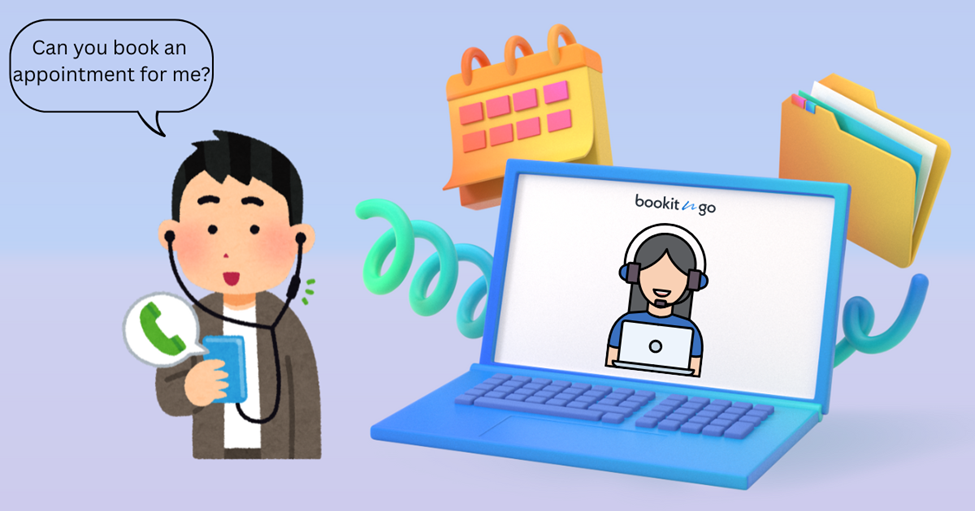
But when something feels urgent, confusing, or just important, most of us still pick up the phone.
Voice feels personal. Immediate. Satisfying. Human.
And people expect speed. Report says 78% of customers now expect faster service than ever before.
Which makes sense. We are used to instant replies everywhere else. Waiting ten minutes on hold suddenly feels like a lifetime.
That is where voice AI customer service automation fits in, answering calls right away, at any hour, without queues.
What it looks like in everyday support
Think about an online store that gets hundreds of calls a day.
Most of them sound the same:
- “I need an urgent appointment”
- “Can I return this?”
- “What is my balance?”
- “Can I reschedule my meeting?”
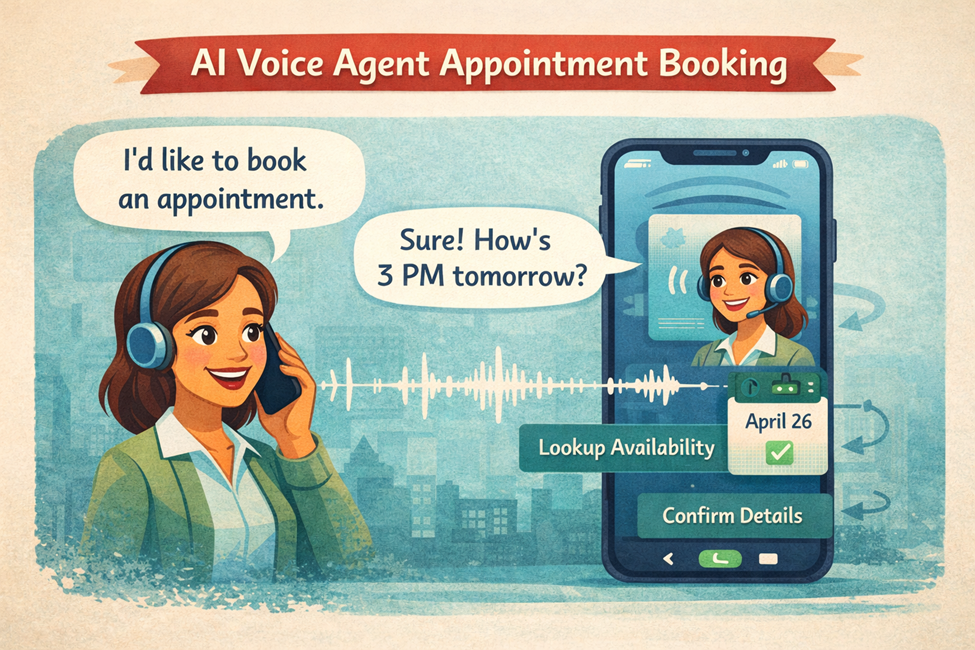
With an AI voice agent customer support setup, these don’t have to reach a human anymore.
- A customer calls.
- The AI answers.
- Looks up the calendar.
- Shares the update.
Maybe even send an update by SMS.
And if the customer sounds upset or the issue doesn’t fit a typical pattern, the call is routed to a human, with all the details already there.
That is where an AI call center voice bot helps. It handles the repetitive stuff, so humans can focus on the calls that actually require patience and empathy.
Now, let us talk sales, where timing is everything
Anyone in sales knows this: not answering or answering too late, and you have probably lost the lead.
This is where voice AI for sales calls is changing things. Someone fills out a form on your website. Instead of waiting for a representative to call back hours later, they get a call almost instantly:
“Hi, I saw you were checking out our plans. Want a quick hand?”
The AI shares the basics, asks a few questions, and if the person sounds genuinely interested, it books time with a human representative.
That is AI voice automation for sales doing the first round of work.
For teams, these sales voice bots mean fewer missed leads, quicker follow-ups, and representatives spending their time where it matters: with people who are ready to talk business.
It is like having extra Sales Development Representatives who don’t need coffee breaks.
Why businesses are adopting AI Voice Agents
There is a convenient reason: it delivers results.
IBM points out that AI-driven customer service is set to evolve dramatically. By 2027, executives forecast a shift toward fully autonomous automation, with 71% aiming for touchless customer support inquiries. An additional 47% foresee touchless automation in customer product and service training, 43% in communications, and 42% in feedback.
Add to that 24/7 availability and the ability to handle thousands of calls at once, and the benefits of AI voice agents start to look pretty clear.
- shorter wait times,
- lower support costs,
- happier customers,
- sales teams that move faster.
That is why AI voice agents for business are no longer just pilots or experiments. They are becoming part of the core setup.
Where you will find AI voice agents today
You might not even realize it, but you have probably already spoken to one.
Common AI voice agent use cases include booking appointments in healthcare, checking balances and blocking cards in banking, changing travel bookings, qualifying real estate leads, and tracking orders in e-commerce.
Basically, if phones ring in your business, AI voice call automation can handle a big chunk of routine work.
And it is no longer just for huge enterprises. Even small teams can start with a straightforward use case and build from there.
But do people actually want to talk to AI?
Let’s be honest. No one wakes up hoping to chat with a bot.
What people really want is simple: get help, quickly, without being passed around.
According to the seventh edition state of service report, by 2027, 50% of service cases are expected to be resolved by AI, up from 30% in 2025.
If the voice sounds natural, the answers make sense, and reaching a human is easy when needed. Sometimes, they even prefer it mainly because it is faster.
Where AI fits and where humans still matter
What seems to work best is when companies stop thinking in terms of “AI versus people.”
They let the system handle the easy, everyday calls, quick questions, simple updates, and late-night requests that don’t really need a person to be awake at a desk.
And when the conversation turns emotional, complicated, or necessary, a human steps in.
Not because the AI failed.
But because some moments need a human.
In setups like this, AI voice agent customer support becomes the first touchpoint. It keeps things moving. And people focus on the work that actually needs experience and judgment.
That is usually when both customers and teams start feeling the difference.
What changes when it all clicks
When AI voice customer service and AI voice automation for sales are done right, nothing feels dramatic.
It is just smoother.
- Fewer missed calls.
- Shorter queues.
- Less stress for agents.
- Better leads for sales.
- Customers who don’t feel ignored.
- No big sci-fi moment.
Just better everyday conversations.
Where SpeakAI fits
Not all AI voice agents are designed the same way.
SpeakAI focuses on handling voice conversations rather than deep system integrations. It answers calls, books appointments, and captures leads without needing access to internal databases.
It works like a virtual front desk that never misses a call.
This makes SpeakAI especially effective for service-based businesses that rely on phones to drive bookings and enquiries.
Let’s take an example: one of my friends owns a salon where they constantly miss clients’ calls during busy hours. She finally decided to add SpeakAI to her business, even though it wasn’t too big. With an AI voice agent, all her calls were answered.
Now, the AI checks availability, books appointments, and shares timings. No more lost bookings just because the staff was busy with clients. And let me tell you it is actually as simple as it sounds.
A simple next step
If your business depends on phone calls for bookings, enquiries, or leads starting with a voice, AI setup does not have to be complicated.
Tools like SpeakAI make it easy to begin with one use case, see the impact, and expand when you are ready. No big promises. Just fewer missed calls and smoother conversations.
Want to see how an AI voice agent would handle calls for your business? Explore SpeakAI or book a quick demo to hear it in action.
Conclusion
A few years from now, waiting on hold listening to music will probably feel outdated. Calling a business and getting instant, helpful, human-like support? That will feel normal. That is where AI voice agents for business are taking us, not toward fewer human interactions, but toward the ones that actually matter.